Busy times at EKO Divers

Posted ago by admin

April and May have been super busy for us here at EKO Divers-

ADEX was a tremendous success, and we’d like to thank all of you who came by to visit, and an even bigger thank you to those who helped out- It was a crazy weekend, and we can’t thank you enough for your efforts!

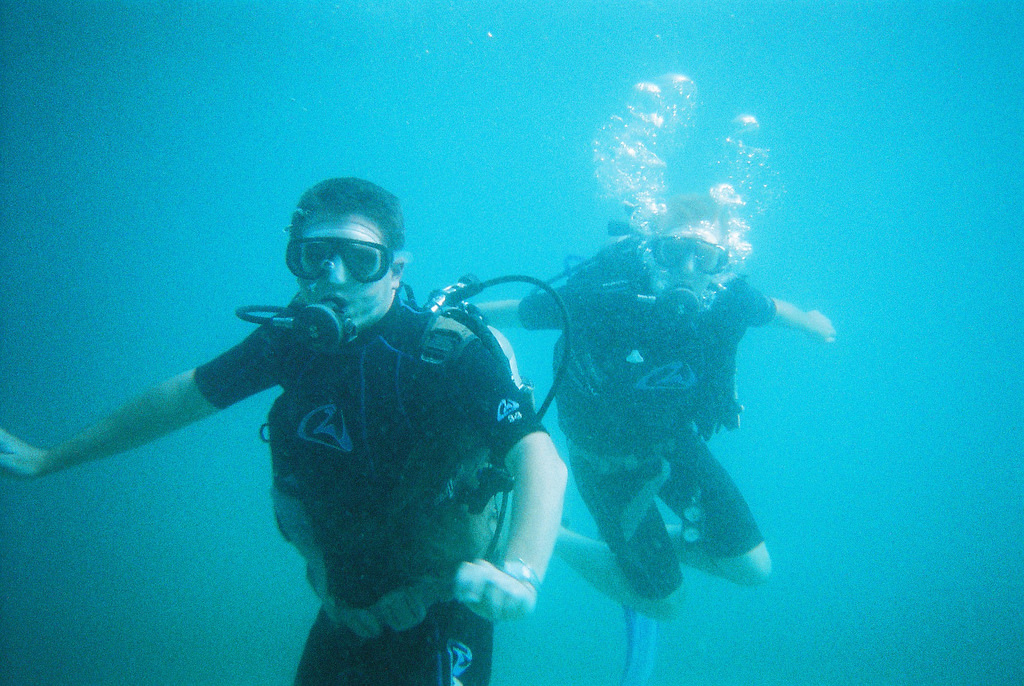
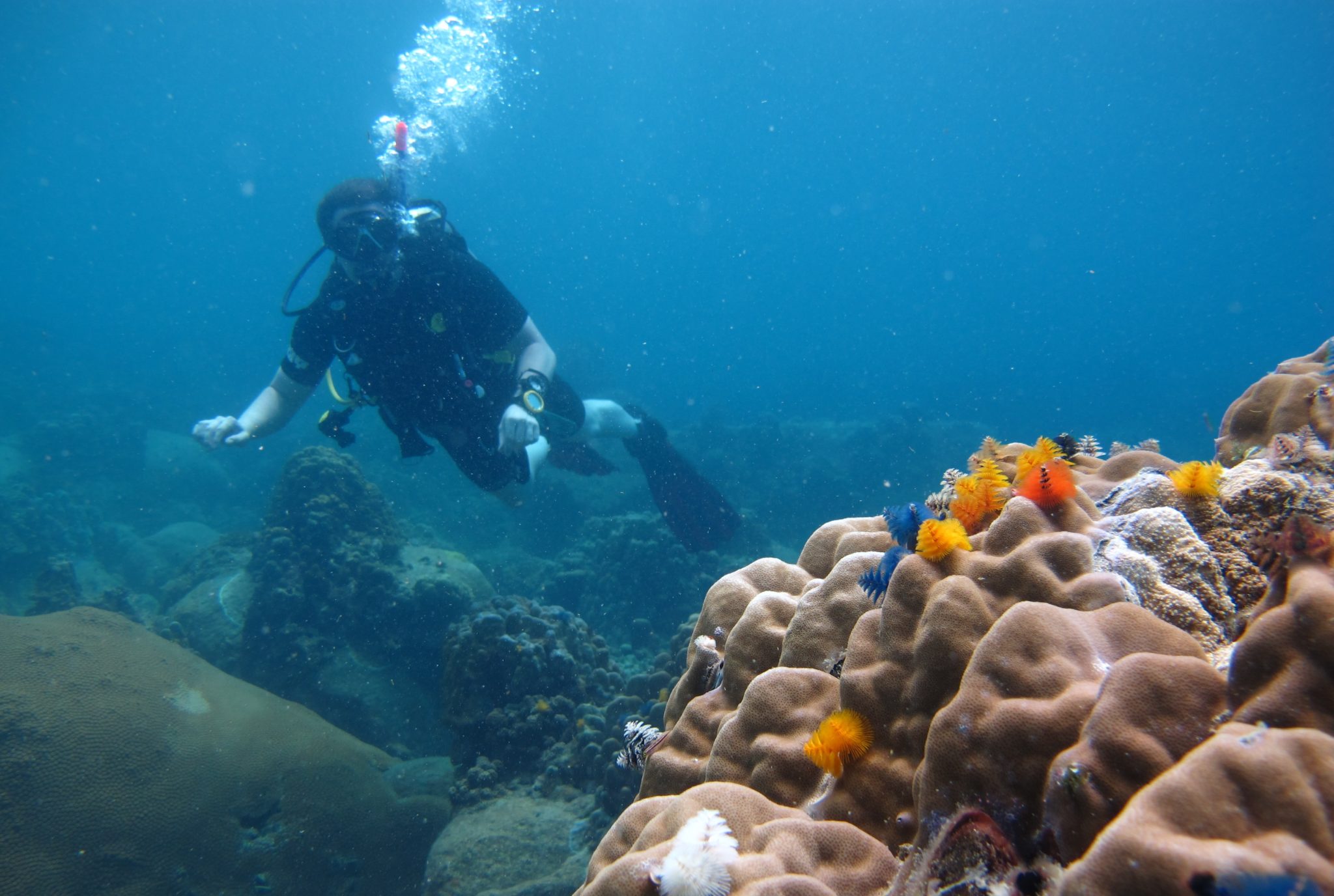
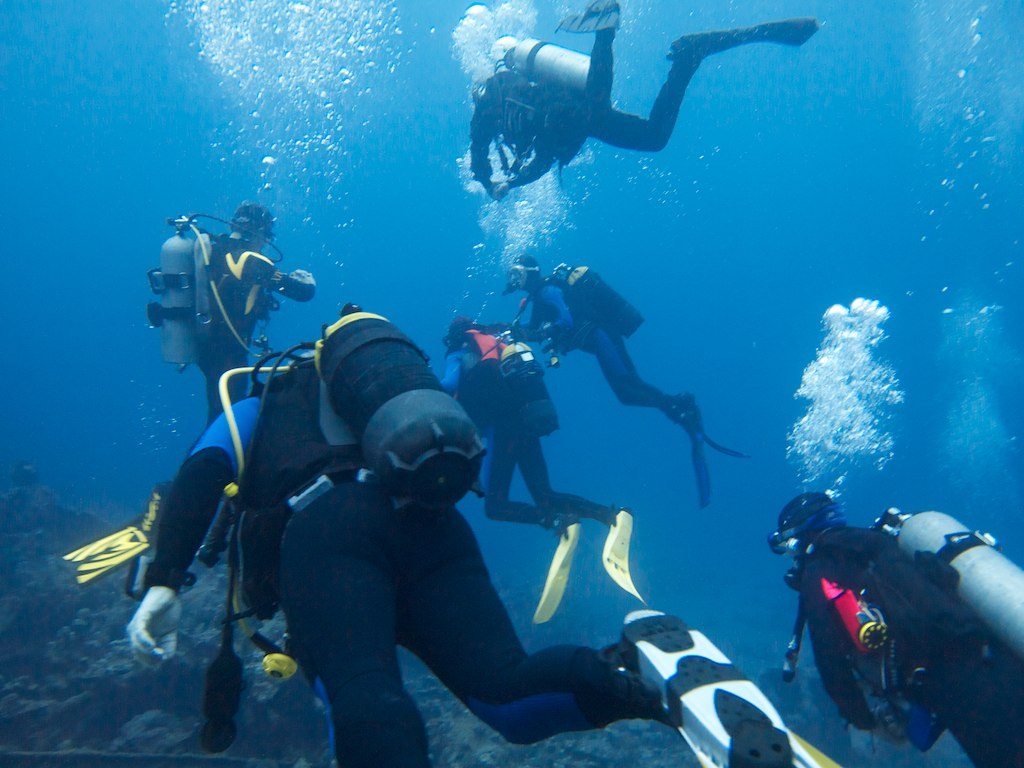
Following that weekend, we’ve had a full classroom nearly everyday since, and trips going out every weekend! Lot’s of fun for everyone! We would like to give a big congratulations to all of you that have passed your Open Water diver, Advanced, Rescue, and Nitrox courses since then, and good luck to those who have their trips coming up! It’s gonna be fun :D

Last weekend, we ran a big event at the ITE West college to introduce the students (And a couple of teachers!) to diving! It was a really fun day in the pool- With 160 students, who were all really great, energetic, excited and alot of fun- We really hope they’ll come back to continue their diving adventures, we look forward to the next event we have coming up. Again, a HUGE thank you to our helpers- You all got great feedback!

Now I’m sat in the shop, with lot’s of new exciting stock to put on the shelves, Lot’s emails to send, paperwork to clear, we have a divemaster in the middle of his instructor course, and classes every night this week… What have we got coming up in the next few weeks?

Next week, a number of our crew are running in the Sundown marathon and wanting to increase awareness of ocean conservation, and raising some money for Project AWAREs Shark Protection initiatives- Please give your support, you can donate here: http://www.everydayhero.com.au/divers_for_sharks

And send some well wishes to our candidate preparing for his Instructor Exam on the weekend!

Dive safe!

-EKO

Eko divers at ADEX 2012!

Posted ago by admin

Eko Divers is going to be at ADEX 2012, at the Marina Bay Sands. We’ll be promoting our diving courses, and selling some equipment- If you’d like to come and see what we’re offering why not drop by our shop? We’re handing out tickets for free entry to the Asia Dive Expo!

See you there guys!

Navigating navigation

Posted ago by admin

I often hear divers telling me that one of the main reasons that divers hire a dive guide to show them around during dives is that they’re afraid of getting lost, or not familiar with navigational skills… While this is an entirely valid, understandable reason to have someone guide you, did you ever think what would happen to these people if they got separated from their dive guides? Doubtless panic would ensue, and possibly tragedy.

Generally speaking a diver can safely follow a buddy who’s good at navigation, or a dive guide on a million dives, and if the diver always stays close, conditions are always calm, and clear, and the buddy/guide is always slow mindful of his follower, they may never have any problems staying close together… But the reality is that this isn’t what diving is like. Sometimes we do lose our buddy, sometimes we get separated due to rough conditions, sometimes we get separated because we were careless to name just a few reasons. Clearly this is one reason why it’s important for us to at least some basic navigational skills.

For our next scenario, consider that you and your buddy (/buddies) wish to visit a dive site, or a spot on a dvie site, you’ve heard about or visited previously… How will you do this without at some kind of orientation, combined with navigational skills?

You could simply be a diver who likes to simply dive with a buddy independent of a dive guide- Taking your time to go where you want and see what you want… Maybe after many dives at the site you will know it like the back of your hand… But to begin with at least, one of you will need some navigational skills, and as we already discussed it’s better if every diver in a group is capable of navigating for themselves.

So what does it take? Forunately, not much! In terms of equipment, we can make do with a simple compass alone. The tricky part then you might say, is how do you learn how to use it? Simply, the answer is to practice!
The PADI advanced diver course includes a dive where you will concentrate on navigational skills!
For those who have already completed the Advanced course and looking to further they’re basic capabilities there is also the PADI Underwater Navigator specialty! Short of this, most important is to practice, practice, practice!

Navigation isn’t difficult, and VERY important! Make sure you have your compass, make sure you know how to use it!

-EKO

Rescue diving

Posted ago by admin

Rescue skills are among the most daunting and intimidating to learn and practice. They can be physically demanding, and require a great deal of practice to master. Furthermore, when a real accident occurs the idea of making mistakes is infinitely frightening…

But people still practice, and do courses to learn these skills. There can be no doubt that no matter how safely you and your fellow divers conduct yourselves on trips, things can and do go wrong. The fact that it is rare causes many people to turn a blind eye to the idea that they may be injured… But when things do go wrong, they are unprepared which is a most terrible feeling.

So what skills should we learn and how can we prepare ourselves?

This is an vastly deep subject which I will barely scratch the surface of here, but to give you an idea of how to get started…
One of the easiest ways to help prepare yourself for emergencies is to simply enroll in the PADI Rescue Diver course at your PADI Dive centre (http://www.ekodivers.com/dive-courses/padi-rescue-diver/).

It’s a short, but challenging course that covers a range of rescue skills and knowledge, enforced with scenario practice. From providing first aid, managing a rescue situation, to working an emergency oxygen unit, or evacuating unconscious divers.

If you’re already a certified rescue diver, you can keep prepared by reviewing your rescue manual once in a while, keeping physically fit, and best of all when you’re on dive trips to constantly consider “what-ifs?”… By being both physically and mentally prepared, we ensure that when something does go wrong we will be ready to deal with sudden and unexpected emergencies.

Dive safe!

-EKO

P.S. A really good tip for rescue trained divers is to always inspect the first aid kit on your dive boat at the start of the trip.. Make sure you are familiar with the contents, how to use it and set it up etc…

Top tip no.2 is always carry a small tool kit with you, and a small first aid kit… You can’t always trust your dive operation to be properly equipped. Especially if you are diving somewhere relatively remote! BE PREPARED!!!

Is fitness really relevant to diving?

Posted ago by admin

A question that many of us ponder as we gently glide across shallow reefs, breathing as if at rest, and feeling at peace with the world around us… “This is so slow, and relaxing… Why does everyone say you must be fit to dive?”.
It should go without question that; YES! fitness is a key element of safe diving in any capacity- But there are many reasons for this, and not all of them are well known.

First of all we encounter this notion during our basic course. First we must all complete swim tests and secondly we hear a number of times during the theory portion that its safer… But how and why?
Overall fitness is immeasurably vital to safe diving- We’ve all heard the stories of divers being swept away out to sea, nearly all of us have experienced a stiff current before and had the thought “What happens if I do get swept away?”.

The truth is, it can and does happen. Quite commonly infact! Fortunately cases of people being completely lost or harmed are EXTREMELY rare but do you think they would have stood a better chance of staying with the rest of their group if they were fitter?

The next danger of being unfit is an unseen one… It’s what happens within our own bodies. We hear a number of times during our dive education that being fit reduces our chances of decompression related injuries. What does that mean? In simple terms, a fitter person with good cardiovascular function, and lower body fat is at lesser risk of suffering pressure related injuries because they will absorb less, and off gas faster the nitrogen which causes Decompression sickness. A diver with poor circulation, respiratory function or higher levels of body fat will absorb more nitrogen, and off gas much more slowly resulting in a higher risk of DCS.

Finally, something to consider is if you are a larger, heavier diver are your buddies, or the people you’re diving with physically capable of helping, and if necessary evacuating you? it’s not hard to imagine the difficulties a small group of divers may face in trying to get a much larger, heavier diver onto any kind of boat.

This all sounds pretty grim… So what’s considered fit and healthy to dive? Well there’s no hard and fast rules or standards on this but it’s generally recommended to do at least 30 mins of light exercise 3 times weekly, and a good rule of thumb is that you should be capable of running at least 3km without too much difficulty! Overall then, no one says you HAVE to be that fit.. But hopefully we all see now- The fitter, the better :D

Dive safe!

-EKO

How you fin, matters!

Posted ago by admin

There are many things we must pay attention to while we dive, some more important than others…

With things like breathing, air supply, no deco limits, buddy position, not to mention all of the amazing things to see around us, to name just a few, its easy to forget that the way we move underwater matters too!

We were all inexperienced, new divers once… We all found out the hard way that inefficient kicks tire us out, without making us move very far… Weak fins coupled with bad buoyancy often leads to stirring up the bottom and reducing visibility at best, or killing marine life and possibly getting ourselves hurt too, at the worst… We’ve probably even found that using our arms while swimming is a really bad waste of energy!

So… How should we be finning?

This video gives a very good demonstration of good, efficient finning techniques…. This is how we should all dive!

http://www.youtube.com/watch?v=5co1E0umtJQ

But as ever- it’s easier than it looks! So what can we do to make it easier?

Firstly, you need good fins! Weak flimsy fins are super inefficient, and you’ll alot of energy kicking your legs very fast (Often giving the illusion that a pair of fins is easier to use!) but without actually moving anywhere… By contrast, a pair of really big, stiff fins are very difficult to kick at all and will tire you even faster. If you get caught in a current with bad fins, you are doomed!


Secondly, we see that our positioning, and trim is important… To improve this you need a couple of things- Breath control, is the key to good buoyancy control, and using a BCD with a bladder to the rear makes it a lot easier to maintain a stable, horizontal profile. Preferably one that will allow you to place your weights behind you! This will help make you more stable!

So now that you know… Go practice! Finning technique and buoyancy control, are the most fundamental skills for a good diver, but also among the most difficult to learn. Pratice, practice, practice!

Let’s be better divers, and be better protectors of the ocean!


Cheers! -EKO

Important dive skills are important!

Posted ago by admin

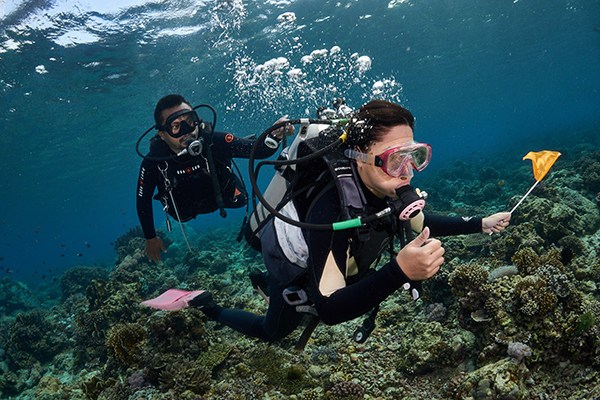
One of the most important skills for the responsible, and safe diver is being able to deploy an SMB (Surface Marker Buoy, sometimes known as a safety sausage). This piece of equipment plays a number of vital roles…

It can be deployed from below the surface to allow a dive group to mark the position on the surface so that boat traffic will be aware and able to keep clear, while notifying a dive boat that the divers are ready for a pick-up.

For divers below the water using a line to control the SMB, they can also use this as a reference for their ascent rate, and for making safety stops.

They come in a variety of shapes, sizes, colours. They’re easy to roll up and store away, and require little maintenance!

A must-have piece of equipment, and a must-have skill!


Dive safe :D

http://www.diveshop.sg/shop/smb/

The Time of the Year…

Posted ago by admin

It’s the time of year that we’ve all been waiting for…

That feeling is in the air…

Sunny days…

The feeling of being complete again, when you dig your dive equipment out from the cupboard…


It can mean only one thing… The dive season is nearly here!!!

People are rushing to get the missing pieces of equipment they need, signing up for their advanced courses and booking trips to the islands! It’s nearly time! Make sure you don’t miss out!


Dive season only comes once a year :D

New stock!

Posted ago by admin

Wooo! Nothing more more exciting than getting new stock into the shop!

Today we have many large boxes of new stock waiting to be played with! I hope we can find time to have a look through and play around with it!

Stay tuned to see what we have in store! AND keep your eyes open for our upcoming special deals!

Oooooh, exciting :D


- EKO

Eko divers is looking for treasure this weekend!

Posted ago by admin

The monsoon season is fast approaching it’s end!

Here at Eko we decided to spend this weekends trip to Bintan practicing some new skills!

http://www.youtube.com/watch?v=OXxgNgXuVrY

This is n’t exactly like what we’ll be doing, some of the same skills are involved
Search and Recovery is a really fun course that involves sharpening your navigation skills, learning some search patterns, knot tying techniques, some new methods of communication, and how to use a lift bag among other things…. It’s exciting, and alot of fun!

The conditions this weekend might not be great… But we say: Bring it on!!!! Wish us luck!

-EKO